Saturday, March 01, 2008

Interstellar Gas Clouds


Simulation of the collapse of an interstellar gas cloud into a massive star. The left side shows the whole cloud, and the right side shows a zoom-in around the massive star in the center. Credit: Mark Krumholz

Two scientists think they have decoded the gassy recipe to create stars as much as 100 times bigger than the sun, perhaps solving the mystery of their formation.

Mark Krumholz Princeton University in New Jersey and his colleague Christopher McKee of the University of California Berkeley used mathematical models to show how small stars can prime superstar formation, and detail their findings in the Feb. 28 issue of the journal Nature.

Gravity tends to break interstellar gas clouds into small pieces, preventing massive star formation, but little stars heating up a gas cloud can smooth it out, forcing gravity to create a huge star.

Star power
Although massive stars are about a million times rarer than the most common stars — those about 80 percent smaller than the sun — they are the movers and shakers of the universe.

"They're very rare, but massive stars are the dominant players in galaxies," Krumholz said. "They're the things that can push around and heat up interstellar gas - essentially where all stars come from."

He also explained that big stars seed the cosmos with elements that are required for life.

"They enrich the universe with metals from their supernovae," he said, noting that only enormous stars are powerful enough to fuse together small atoms and create the heavy materials.

Hot influence
To form a galactic superpower, Krumholz said an interstellar gas cloud needs to be thousands of times more dense than average. Problem is, gravity tends to break dense gas clouds into pieces and thwart massive star formation.

"The challenge isn't getting enough gas, it's getting the cloud into a small enough region and preventing its breakup," he said.

If a few small stars form within the cloud, Krumholz explained, they can heat up the cloud and increase its "column density," or pressure. The heating process prevents gravity from taking control of the cloud, breaking it up and forming only small stars.

"Heating up the gas helps pressure win over gravity's influence, ultimately forcing the gas cloud to collapse in a massive star," Krumholz said.

The new view of star formation highlights the rarity of massive stars — the only kind astronomers on Earth can see in distant galaxies — but leads to the possibility that more stars form in galaxies than previously thought.

"There may be significant parts of galaxies where massive stars can't form, but lower-mass stars like the sun can," Krumholz said.

We estimate the number of stars in a galaxy on the amount of light we see, and if massive stars are missing, then it's possible that we've dramatically underestimated the rate of star formation in distant regions of the universe.
__________________________________________________________
__________________________________________________________
Massive Stars Need Their Smaller Siblings To Grow @ Universe Today
The Dragon - Beijing's New Monster Airport from The Daily Galaxy
X marks the spot in dark matter web from Space New Scientist
__________________________________________________________
__________________________________________________________

Labels: , ,

Saturday, November 10, 2007

Stellar Bubble Blower


HH 46/47. NASA/JPL-Caltech/T. Velusamy (Jet Propulsion Laboratory)

A new image from NASA's Spitzer Space Telescope shows a baby star 1,140 light-years away from Earth blowing two massive "bubbles." This young Star, called HH 46/47, is using powerful jets of gas to make bubbles in outer space.

The infant star can be seen as a white spot toward the center of the Spitzer image. The two bubbles are shown as hollow elliptical shells of bluish-green material extending from the star. Wisps of green in the image reveal warm molecular hydrogen gas, while the bluish tints are from starlight scattered by surrounding dust.

These bubbles formed when powerful jets of gas, traveling at 200 to 300 kilometers per second, or about 120 to 190 miles per second, smashed into the cosmic cloud of gas and dust that surrounds HH 46/47. Red specks at the end of each bubble show the presence of hot sulfur and iron gas where the star's narrow jets are currently crashing head-on into the cosmic cloud's gas and dust material.

According to Dr. Thangasamy Velusamy of NASA's Jet Propulsion Laboratory in Pasadena, Calif., baby stars and their potential planet-forming disks grow by gravitationally pulling in and absorbing surrounding gas and dust. Scientists suspect that these disks stop growing when the central baby star develops powerful winds and jets that blow away surrounding material.

"Spitzer can image these jets and winds in infrared light and help us understand the details of these phenomena," says Velusamy.

Spitzer's supersensitive infrared instruments are excellent tools for studying young stars embedded within thick clouds of cosmic dust and gas, revealing information about their growth.

When you see a star through a telescope, its image is blurred in a known way. The smaller the telescope the larger is the blurring.

To clear up this blurring, astronomers at JPL developed an advanced image-processing technique for Spitzer data called Hi-Res deconvolution. This process reduces blurring and makes the image sharper and cleaner, enabling astronomers to see the emissions around forming stars in greater detail. When Velusamy and his team applied this technique to the Spitzer image of HH 46/47, they were able to see winds from the star and jets of gas that are carving the celestial bubbles.

According to Dr. William Langer, also of JPL, this image will help scientists determine which of many different mechanisms are responsible for producing the winds and jets of baby stars.

This infrared image is a three-colour composite, with data at 3.6 microns represented in blue, 4.5 and 5.8 microns shown in green, and 24 microns represented as red.
___________________________________________________________
___________________________________________________________

Labels: , , ,

Thursday, August 30, 2007

Planet Forming Supersonic Rain


Swirling disc of gas & dust surrounds a developing star (Illustration: NASA/JPL-Caltech)

Water from space is 'raining' onto a planet-forming disc at supersonic speeds, new observations from the Spitzer Space Telescope reveal. The unprecedented detail of the observations at this early stage of the disc's formation could help reveal which of two competing theories of planet formation is correct.

Planets form when matter clumps together in swirling discs of gas and dust, called protoplanetary discs, around infant stars. But many details of how this works are still not known. For example, some scientists think giant planets can form in just a few thousand years, while others argue it takes millions of years.

Now, astronomers led by Dan Watson of the University of Rochester in New York, have gained an unprecedented view of a protoplanetary disc at the young age of just a few hundred thousand years old.

They used the Spitzer Space Telescope to examine the spectrum of infrared light coming from the vicinity of an embryonic star called IRAS 4B, which lies about 1000 light years from Earth.
[+/-] Click here to expand

Outer cocoon
At this very early stage, an outer cocoon of gas and dust called an envelope still surrounds the star and its swirling disc. Previous observations in the microwave portion of the spectrum suggested that this large cocoon is contracting and sending material onto the disc. But the inner region, where the disc meets the cocoon, could not be seen at these wavelengths.

The Spitzer observations probe this inner region and reveal infrared light emitted by massive amounts of water vapour – the equivalent of five times the content of the Earth's oceans.

The vapour is too hot to be explained by the embryonic star's radiation alone, suggesting another process must be heating it up.

Sonic boom
The team believes ice from the cocoon is pelting the disc at a rate faster than the speed of sound there, creating a shock front. "The sonic boom that it endures when it lands on the disc heats it up very efficiently" and vaporises it.

This supersonic shock "has been searched for and theorised about for decades", Watson says. It is a short-lived phenomenon that only occurs during the first few hundred thousand years of the star and disc formation, while the envelope is still feeding the disc.

The light emitted as the icy particles hit the disc can be used to learn more about the disc itself at this early stage, which could shed light on how planets form.

Turbulent birth
Most astronomers believe planets form according to a model known as "core accretion", in which small particles snowball into larger and larger objects over millions of years.

A competing idea, called "disc instability", is that turbulence in the disc can cause matter to collapse into planets extremely quickly, producing gas giants such as Jupiter in just a few thousand years.

"If you wanted to test between those scenarios, one of the most important places to look would be the stage we're looking at now." Future observations of such young discs could reveal how turbulent the discs are, and thus whether they boast the conditions required for disc instability. "The whole subject of the very beginnings of the development of solar systems is open to study now," Watson says.

Source: The development of a protoplanetary disk from its natal envelope

_________________________________________________________
_________________________________________________________
Stars and Habitable Planets from Solstation
Star system soaked with rain from LiveScience
Protostars by Thomas Green @ American Scientist
Major Planet Forming Mystery Solved from LiveScience
_________________________________________________________
_________________________________________________________

Labels: , ,

Friday, June 01, 2007

Star Formation


A new Star is Born


Star formation results in a complicated system in which the young star is surrounded by a disc of gas and dust. This matter then follows one of three different routes. It finds its way onto the star through magnetic funnels, or stays in the disc to form planets, or is thrown clear of the system in a wind or jet created by the overall magnetic field.

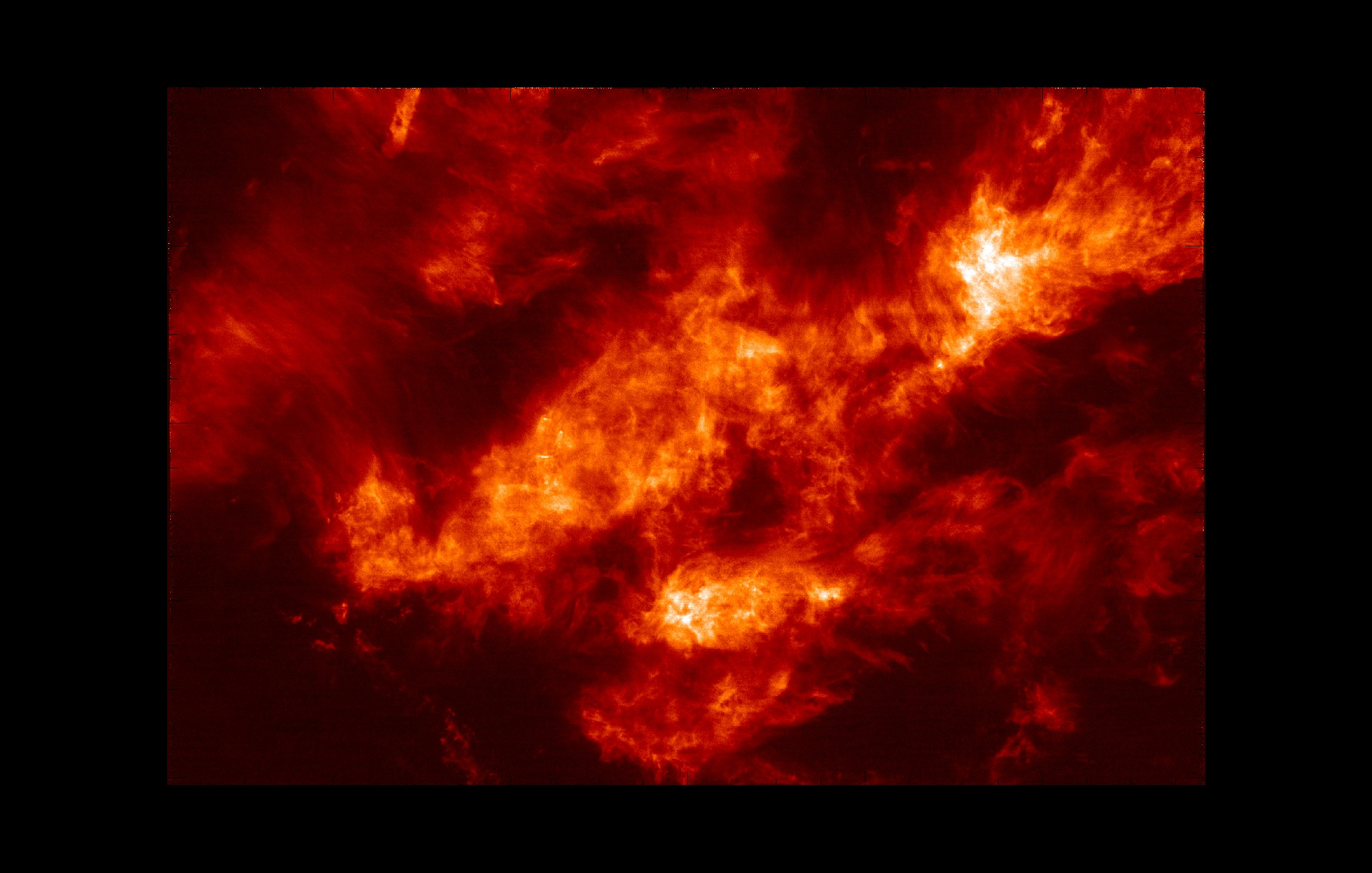
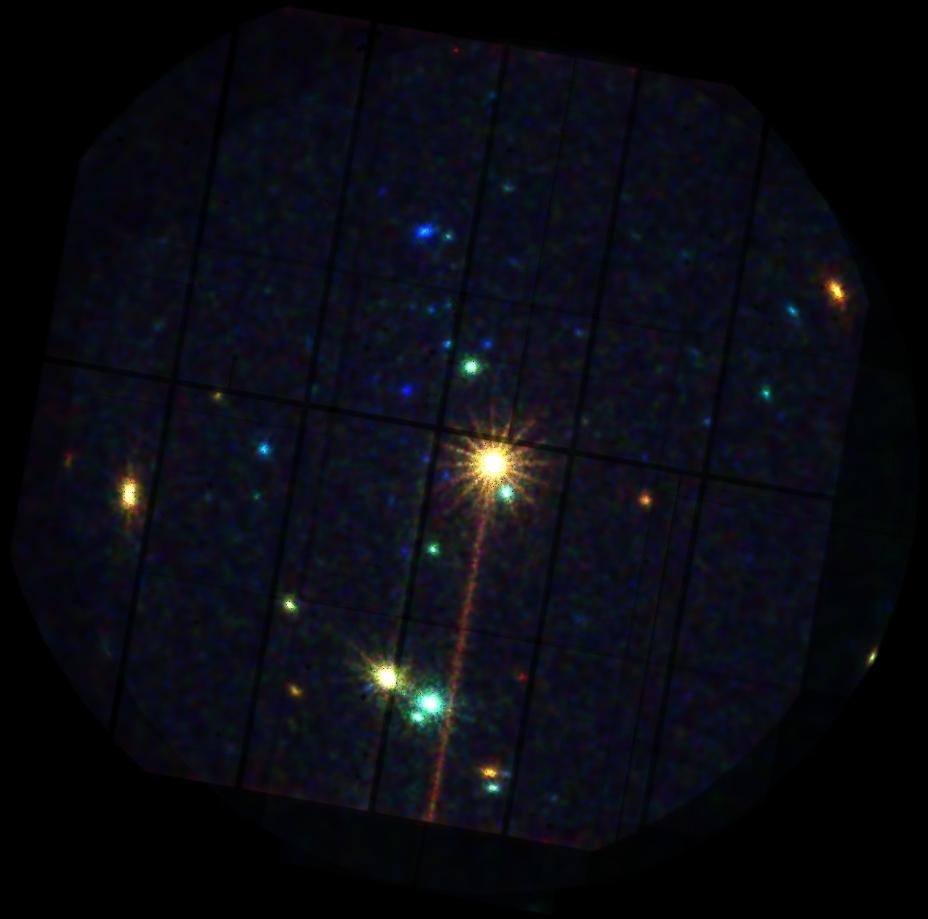
XMM-Newton was used to target stars in the nearby Taurus Molecular Cloud. This vast cloud in space is one of the star-forming regions nearest to Earth and contains over 400 young stars.

The results defy astronomers’ expectations, as the streams of falling matter interact with the hot corona, cooling it, while the ejected streams of gas heat up in shocks as they are ejected from the star.

Most of these stars are still accumulating matter, a process known as accretion. As falling matter strikes the surface of the star, it typically doubles the temperature of the surface from 5000 Kelvin to 10 000 Kelvin. This produces an excessive amount of ultraviolet radiation emitted by the star and detected by XMM-Newton’s Optical Monitor. Astronomers had thought that the same shock waves that caused the emission of the ultraviolet excess should also produce an excess of X-rays.

Taurus Molecular Cloud Credits:(FCRAO), Gopal Narayanan / Mark Heyer
X-ray young stars in Taurus region Credits: ESA/XMM-Newton/Paul Scherrer Institut
XMM-Newton reveals X-rays from gas streams around young stars from ESA
________________________________________________________
________________________________________________________
XMM-Newton deciphers the magnetic physics around forming stars
Special feature from Astronomy & Astrophysics
________________________________________________________
________________________________________________________

Labels: , , ,